
The MSD has contracted REAP Aotearoa/ REAPs to deliver programmes and support that remove the barriers to participation that are faced by many people, as a result of Covid-19.
Tracey Shepherd, the Director of REAP Aotearoa, says that the funding is on the back of the excellent work REAPs did during the pandemic last year.
Most REAPS have long had individual contracts with the MSD to provide specific educational opportunities.
Now there is a national approach to address specific Covid-related barriers, and it is funded by a small national contract.
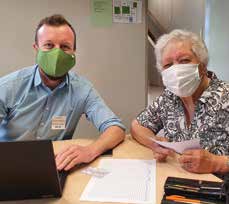 The services provided are to be dependent on the issues and solutions identified by each community. REAPs identified that services could include (not limited to) increasing digital skills (including getting a birth certificate, Real Me etc and learning how to do things online – such as banking); getting a driver licence; becoming work-ready including having a cv developed though mentoring conversations; or completing a budgeting course.
The REAP Aotearoa report on activities from October 1 to December 31, 2021, demonstrates some trends in provision. For example, over 1600 people were helped to download or get a laminated print-out of their vaccine pass, and around 140 people were helped to get their driver licence.
For this article, to get a bit more detail, we talked with staff in two REAPS – Eastbay and Southern.
Ryan Morrison, the CEO of Eastbay REAP, says that they have used the funding to work intensively with rangatahi and whānau needing support:
”The fact that Mel Jans, our ACE Sector Leader, has established relationships with many of the marginalised whānau in her community, has meant that she has been able to go to whānau that she already knows, and give them the support they need to get onto a learning pathway. Sending someone onto a ten-week course, doesn’t do it. Because Mel knows them, she is able to have straight up conversations about what is going on in their world and how they can build a way out of it.”
One whānau that Mel has worked with had experienced enormous trauma. There were three rangatahi aged between 16–24 living at home and parents struggling to provide the advice and support needed to step into employment or further education. In Mel’s words she has helped them ‘unpack their goodness’ – finding their strengths, dreams and aspirations – as well as their challenges. They’ve had discussions about what is possible. Each of the rangatahi now has a pathway plan that requires actions up until June 2022. The rangatahi are all on board and making progress. “It’s life-changing stuff,” says Ryan.
Mel has also worked with five MSD clients who have disengaged from a regional licensing opportunity. It’s needed intensive pastoral support, about 30 hours for each whānau, to achieve a result: the five now have their licence.
A third intensive relationship, this time in partnership with Opotiki College, was established with a rangatahi who was, the school thought, on the way to becoming NEET. With practical support, along with mentoring to give her confidence in her leadership qualities, she is now enrolled in another year’s schooling.
So Eastbay REAP provided targeted individual support that helped vulnerable people onto a learning pathway.
Southern REAP used the MSD funding in a rather different way. They were aware of a range of community learning needs that they could see might be met by the additional funding.
Dawn Brocks is the CEO of Southern REAP:
“Since the arrival of Covid-19 into our communities we have noticed an increase in anxiety and uncertainly amongst all age groups. Alongside Covid-19 lockdowns, we have also had communities face bank closures and limited employment opportunities. We are also aware of a real lack of digital literacy. So we decided to run a series of workshops to help people get jobs, and to manage their lives in the Covid environment.”
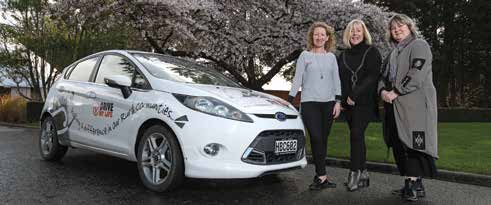
Like many REAPS, they helped a whole lot of people get a driver licence, which is often a requirement for work – or a necessity. Volunteer community mentors drove with learners so they could build up their driver hours, and road code support was provided though workshops across the rohe – in Southland, Whakatipu and Fiordland. “We engaged with 229 people,” says Jonelle McDowall, the ACE Manager. “One hundred and fifteen passed their licence tests, 73 their learners, 34 their restricted and 8 their full licence during the reporting period 1 October to 31 December. We continue working with the others helping them to achieve their licence goal.”
Other support for job seekers included help in writing a cv. Ten people worked with a skilled person via phone, online or in person to create one or do an update.
Sixty-three people were able to gain their level 1 First Aid certificates also often a requirement for some workplaces.
Support for living in the Covid environment included a Digital Banking course in both Winton and Gore. It was a four-hour course run over two days, and it was delivered in collaboration with a local bank. Jonelle says that the banking tutor is continuing to provide ongoing support for their customers, and referring those who bank elsewhere to the right person within their bank, so they too can get ongoing support. Sixteen people attended these courses over this time.
Another collaboration was with the Digital Inclusion Alliance Aotearoa, providing 15 people with the opportunity to complete a Better Digital Futures for Seniors course. They learned basic online skills such as accessing and browsing the internet, as well as how to email and how to manage photos.
And 42 people were assisted to get, print out and laminate or, if they wished, upload their vaccine passport onto their phone.
Finally, Southern REAP offered a Mental Health First Aid course. Eight people came to this. “It taught people how to recognise mental distress,” says Jonelle, “so they could address their own mental health and learn how to identify and support others.”
Dawn says that receiving this extra funding from the MSD has enabled their team to provide more extensive support across their rural communities. “Working often on a one-to-one basis assisted these learners to overcome barriers to learning at this time of heightened anxiety.”
Tracey Shepherd, Director, REAP Aotearoa says that the organisation is proud of the work the 13 REAPs are doing to support their communities during these challenging and trying times:
“It shows how integral REAPs are in terms of supporting their communities. They work alongside their communities to provide the support they identify they need, ensuring they take a true community led approach to meet those needs. Doing it with the community, not to the community.”