
A 2022 ACE Aotearoa Professional Development grant to Te Matarau Education Trust is a good example of how a very small investment can produce some life-changing results.
Te Matarau Education Trust is a collective of hapū and iwi who work together to support Māori and Pasifika Trades Training in Tai Tokerau. They work in collaboration with tertiary providers and other partners such as Skills ITO, Service ITO, BCITO and the Primary ITO. Each year Te Matarau Education Trust helps connect Māori and Pasifika learners in Northland with fees-free trades training. The scheme is a part of the Government’s Māori and Pasifika Trades Training initiative and has been operating in the Far North since 2013. The aim is to enable more Māori and Pasifika learners and jobseekers to obtain practical qualifications, trades, apprenticeships and employment.
The core business of Te Matarau Education Trust is to provide manaakitanga for akonga registered in a trade with Te Pukenga and meets the funding criteria of MPTT. Each akonga is supported by a Te Matarau kaimahi/mentor who works alongside akonga to reduce barriers to learning and helps them into their chosen higher learning or employment.
Georgina Curtis-Connelly is the General Manager of Te Matarau Education Trust which is based in the Future Trades Te Pukenga building in Whangarei. She explains what they used the PD grant for, and why it was so valuable.
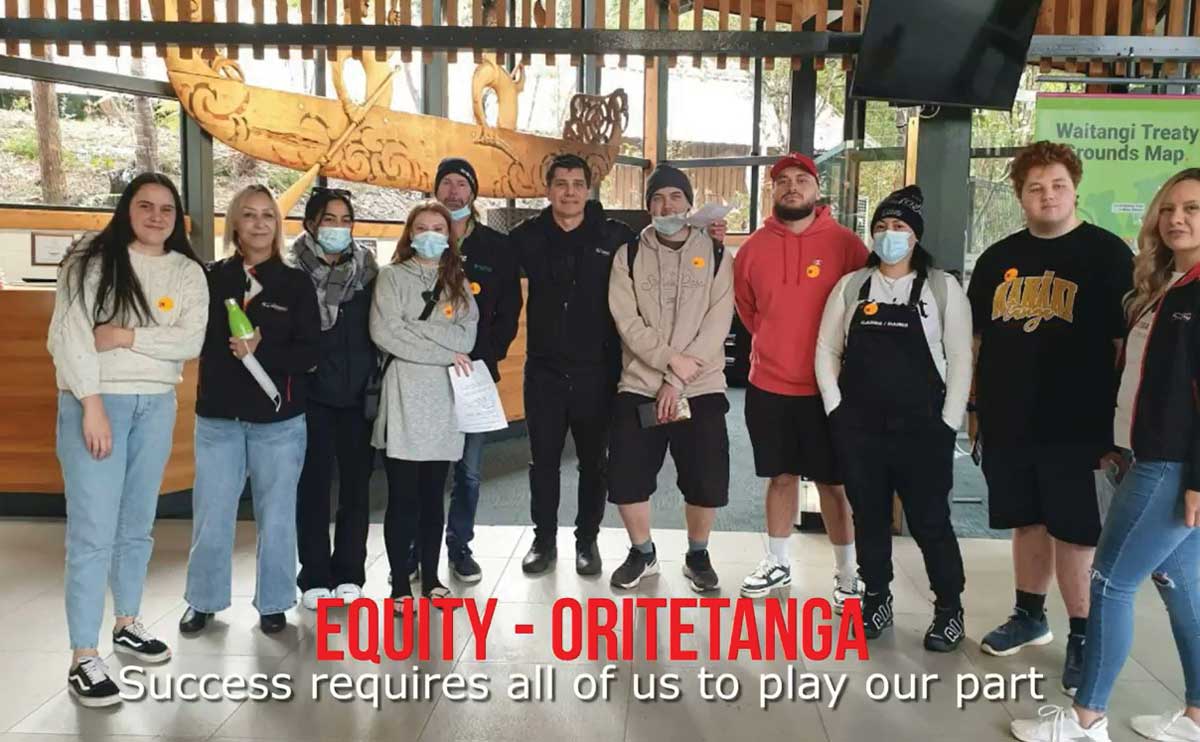
“With the support of the PD grant, we were able to deliver two wānanga at the Treaty grounds at Waitangi for our akonga, and Te Pukenga tutors. We kept our groupings small for the purpose of building whanaungatanga, so we had just 12 in each event. It was a good number to start with.
“Our wānanga were based on cultural practices and how these practices can be interwoven into the teaching practices and thought processes of akonga. We talked about three principles of Te Tiriti o Waitangi – rangatiratanga, (your worth). kaitiakitanga (being responsible) and oritetanga, (equal rights), Akonga learned how they can apply these to their lives, learning, mahi and future. It shifted their thinking.
“In terms of rangatiratanga we shared creative ways to take ownership and responsibility for their learning. We talked about pathwaying into higher learning, how qualifying in the preferred trade can also lead them into higher skilled roles such as managing and overseeing a project. We all can step into leadership roles if we aim high enough.”
“Kaitiakitanga is normally considered to be around guardianship and protection of natural resources. This was also discussed in the sense of our environmental footprint. We talked about, is it big or small? Are we user friendly with products in the construction sense of how we dispose of products or what we are using? Yes, it is all of those things, but it is also about their guardianship over their own learning and recognising the important roles of community or whānau support. This also became an opportunity for tutors to give feedback and join in the korero. Many of the young we mahi with are disconnected from whānau and their whenua. We become their whānau during this journey.”
“Whakawhanaungatanga is a way in which we connect to one another (hono) but it is also about pepeha (ko wai au – who am I). It establishes where we fit. Akonga established whānau ties and reconnected that day. They got a sense of belonging. You could see that by being there they were beginning to feel more comfortable in their own skin. They stood with confidence, presenting back their whakaaro to their peers. Leadership attributes in each one was encouraged and affirmed as each led their presentations and feedback of key learnings to the roopu. They were mana-enhanced to see their place in future trades development from a kaupapa Māori perspective. They were empowered with new cultural learning tools. It accelerated their enthusiasm for learning and development. They loved it.”
Georgina says that with more women entering the trades training sectors, oritetanga is even more relevant. Employers need to look at their work environment and make sure that it supports and invites women into their work force.
“I think the whole experience of visiting the Te Tiriti grounds and seeing all the historical and educational resources available such as history films, stirred some thought-provoking changes on ko wai au (who am I). It made them want to be reconnected. We use Te Whare Tapa Wha, the four cornerstones of health: hinengaro, whānau, wairua and tinana (mental clarity, family, spirit, body). Through this much appreciated funding, we delivered on all these cornerstones.”
Amy Thompson, who is a tutor at NorthTec’s Food and Beverage course in Kaitaia, says that the support Te Matarau provides for her Māori and Pasifika students means that they can now succeed, whereas before, often because of difficulties such as bad living conditions they have failed. Success means that they can now get a student loan. “Te Matarau pays for them, rather than punishing them for their past, so they can study. The wānanga at Waitangi was amazing for them. It opened their eyes. Most of them, although they live up here, had never been to Waitangi. They got to see and learn things that shape who they are. It was really important for them to get that information. The whanaungatanga sessions started them thinking, who am I and where am I from? It builds their confidence.”