
Working out how to engage with the hard-to-reach Pacific population can be a challenge.
A Marlborough PHO, Kimi Hauora Wairau Trust, has come up with an engagement tool and follow-up process that is not only improving family health, it is drawing Pacific adults who have not long settled in New Zealand, into other community education opportunities.
Sana Daunauda is the Pacific Health Development Manager for Marlborough PHO Trust. When he was appointed in 2010 the first thing he asked of the board was for some funding to do research into the health needs of the Pacific community. Sana wanted hard data.
At that time the Pacific community in Blenheim and surrounding area numbered around 670 and 90 percent were newly arrived, brought into the region to work in the vineyards.
The funding was found and Sana, along with Dr M. Cragg, started a Health Needs Analysis with some of the focus groups in homes. They identified four main barriers to accessing health services and wellbeing: the cost of health services/the cost of living; leadership in the community, where leaders often acted as gatekeepers to information and services; communication difficulties; and a lack of knowledge about services that are provided in their community.
One thing that Sana noticed when he was in their homes was that nearly all the families were living in houses with large, unused back yards. He came up with a plan.
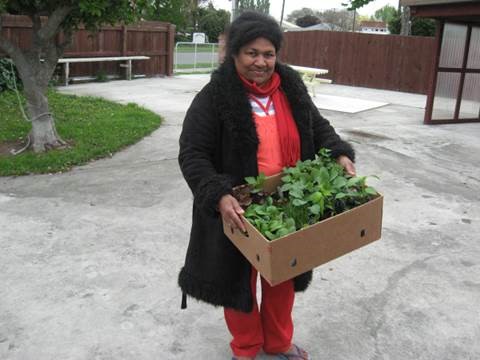
Sana: “These people were subsistence farmers in their home islands - they know how to grow vegetables. So, we decided that the first stepping stone was to offer them vegetable seedlings to grow. We gave each family 20 plants and we asked them to choose at least some varieties that were new to them. It was our way of getting a foot through the door. To get the vegetables people had to register so

we got a phone number and a legitimate address. We employed a Pacific Fānau Advocate, Mr. Lasike Kula who got to know each of the families. We allowed plenty of time for building up trust. It takes about six months to do that. As we were regularly in their homes we could observe issues that affect their family health, such as overcrowding. Then, after some months, we could sit down with
them so they could tell us what their health issues were.
“When I first thought about helping them grow vegetables I considered using the community garden. But that meant that they had to travel, and that takes time and has a cost. Now we have a regular competition – who has the best vege garden and best clean home, inside and out.
“Because of this approach we now have 100 percent of our Pasifika families registered with GP services. Before only 20 percent were.
“We are actually working in four domains: health; economic; leadership/culture; and education. Education is the key to the success of other domains.
“Our PHO provides some education in the non-communicable diseases such as Diabetes, CVDRA etc. and once again we take these into homes. We have cooking classes called Taste and See, and in group of four families (16 all up) they prepare healthy nutritious meals based on a budget. We also collaborate with the PHO Green Prescriptions Instructor working with mums who have just had a baby and put on a lot of weight. The instructor works with them and sets up an exercise programme that matches their current abilities. Each of the mums has a target weight loss to achieve by the end of the year.
“We also collaborate with other services. Some people have language barriers and we refer them on to ESOL classes. I work closely with Ailsa from the Marlborough REAP and some people have gone on to their programmes such as Computers in Homes and weaving classes for Tongan and Samoans. Some of the people who have been in our Vege-cation programme have gone on to get driving licences – including Fork Lift and Truck driving licences. One single mum with nine children who is still on the Vege-cation programme has done Administration Levels 1, 2 and 3 through NMIT. Another Tongan mum completed a Nursing Course through NMIT. She has now moved out of the region.

“Our Service Delivery Model is called “Talanoa Mo’ui” (Talking Health/Well-being). Pacific people like to talanoa, and they look forward to it. But our talanoa is deliberate and purposeful – we are seeking an outcome at the end of the conversation.
“I also believe that the silo mentality is good. We work within that cultural silo first and build trust in their way. Once they have confidence we can open them up to meet with others.
Vege-cation is funded by Pasifika Futures Whānau Ora. This year the programme won the People’s Choice Award and Best Presentation at the 2017 Nelson-Marlborough Health Quality Innovation Awards.